Project
Scrap Wood Box Design Tests
Build Date:
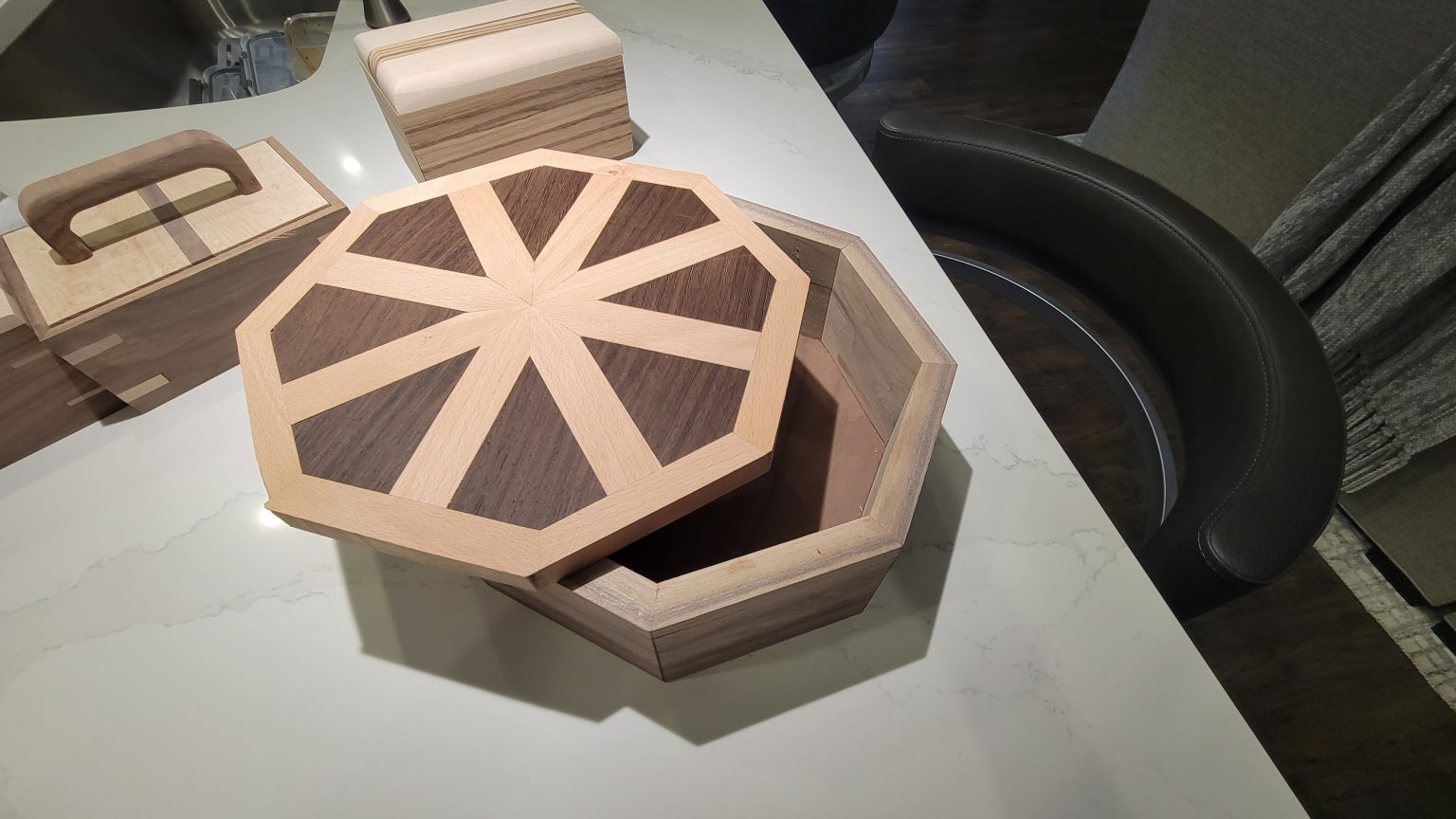
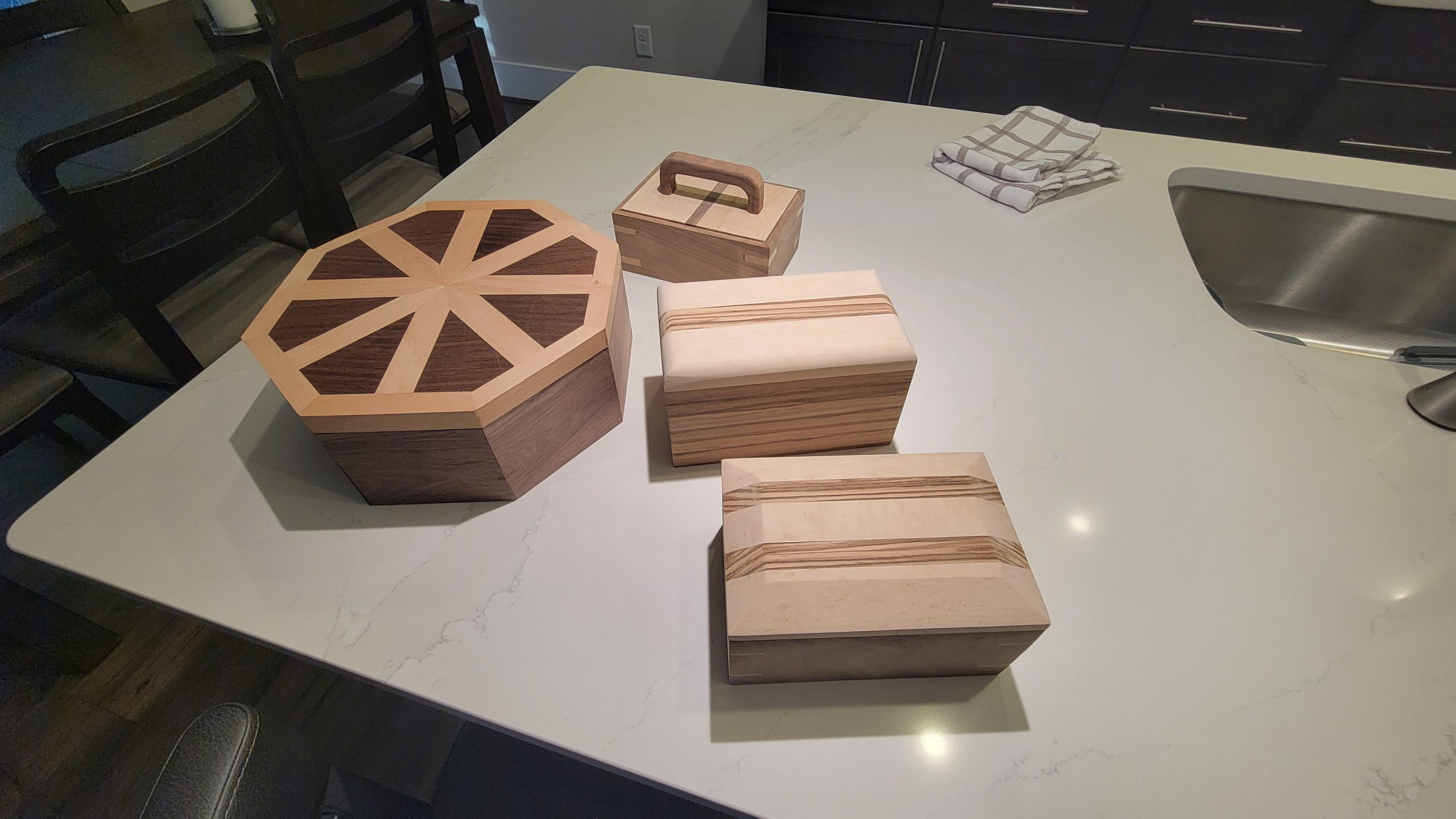
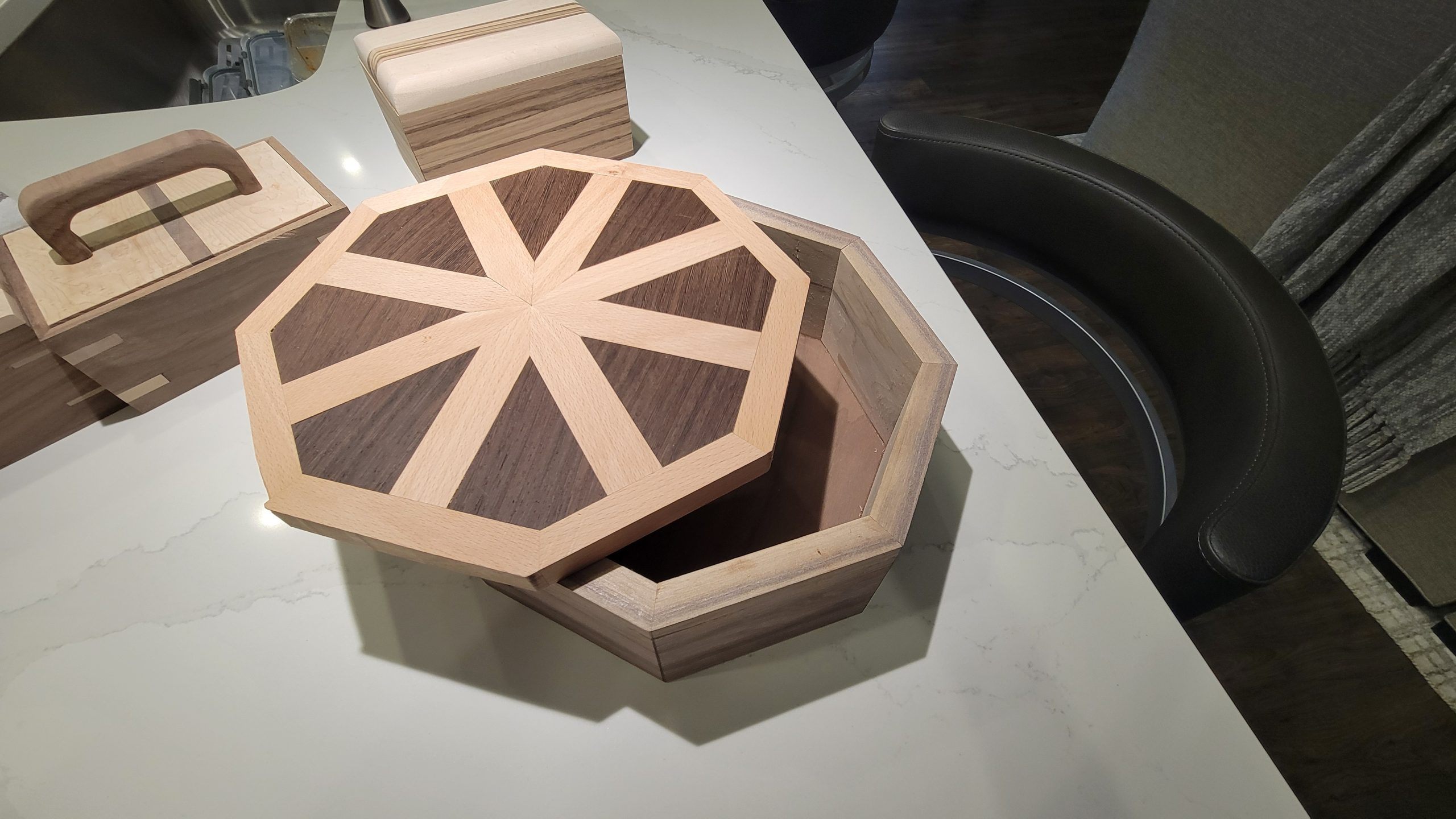
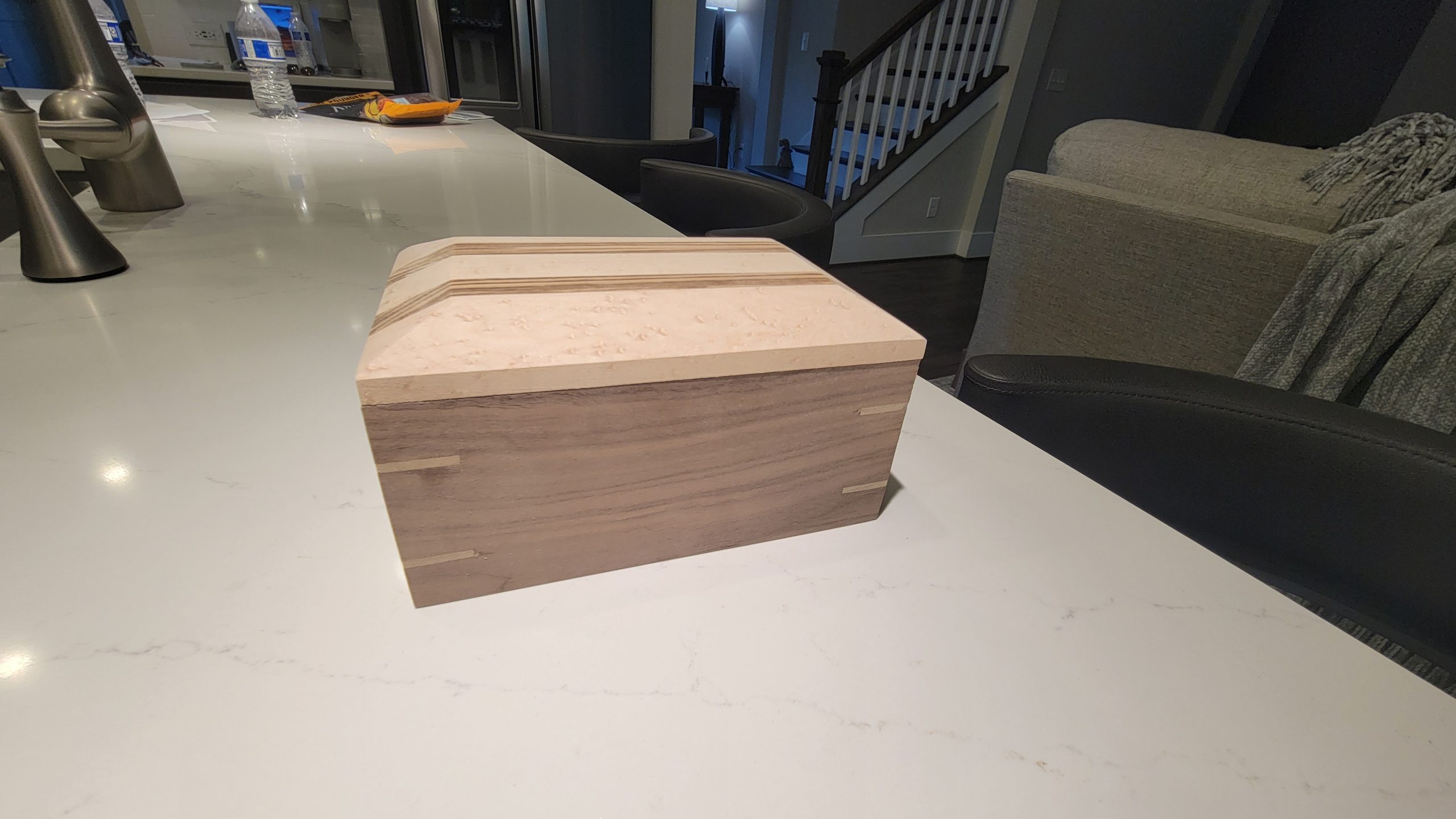
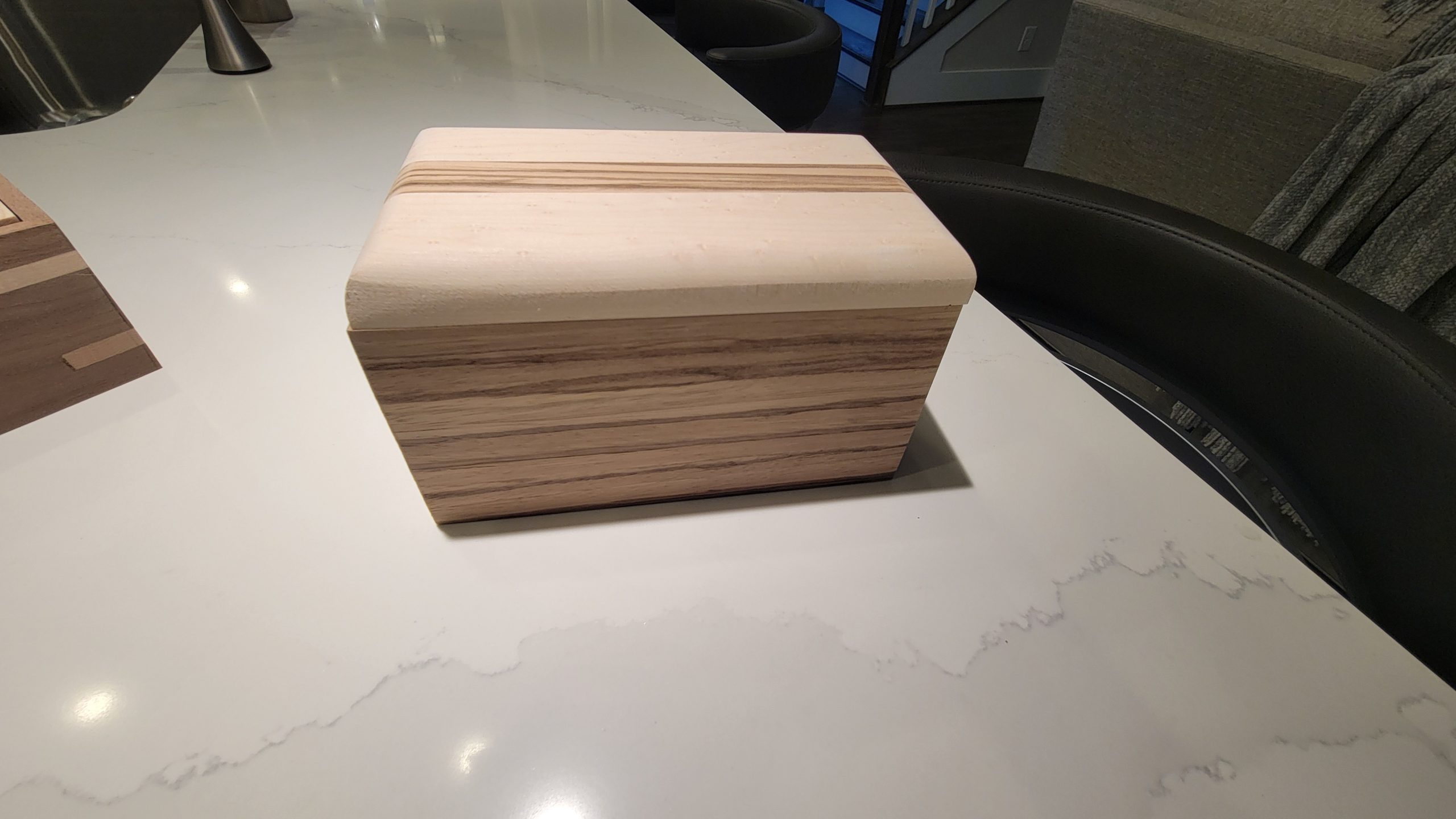
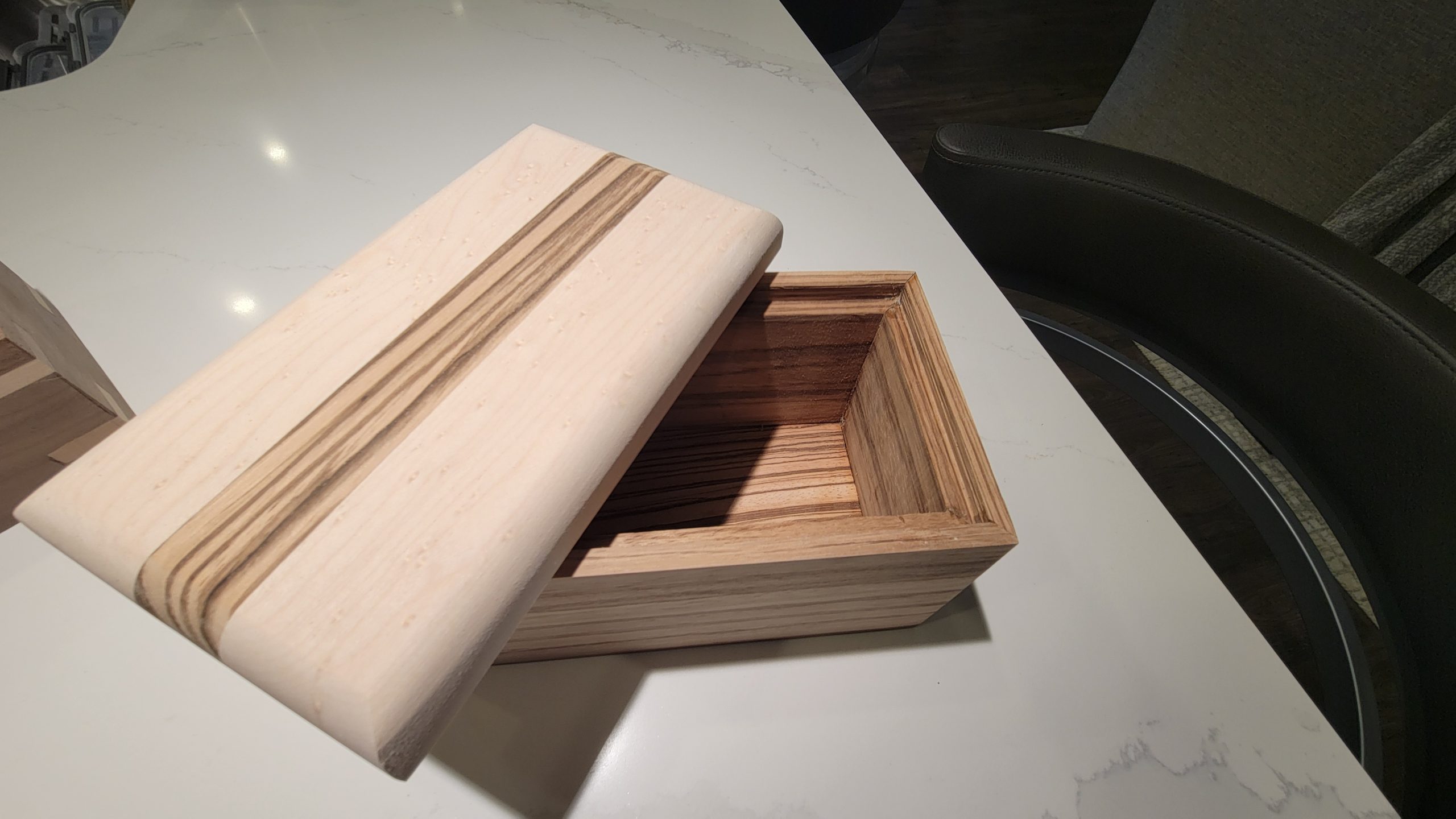
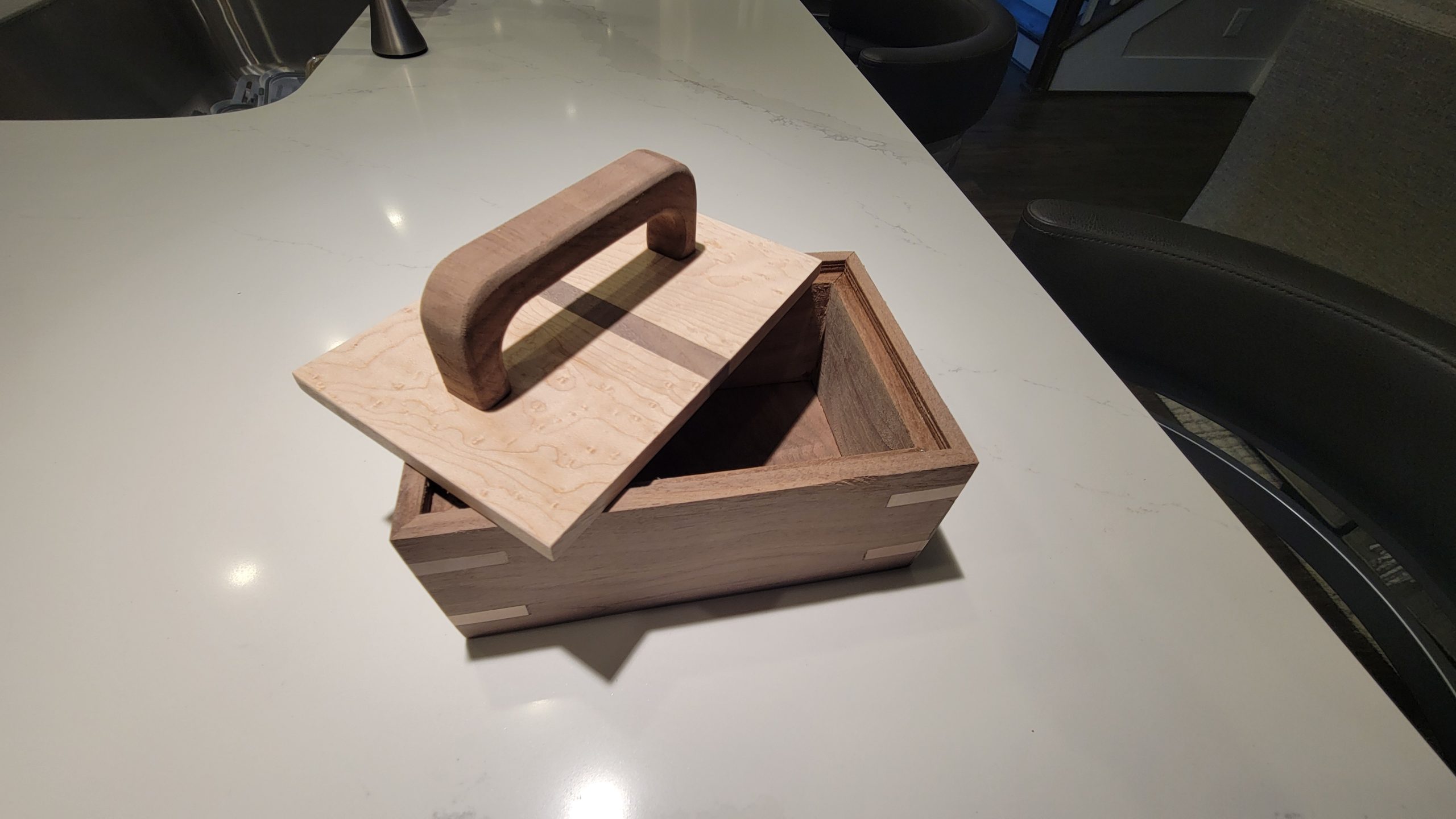
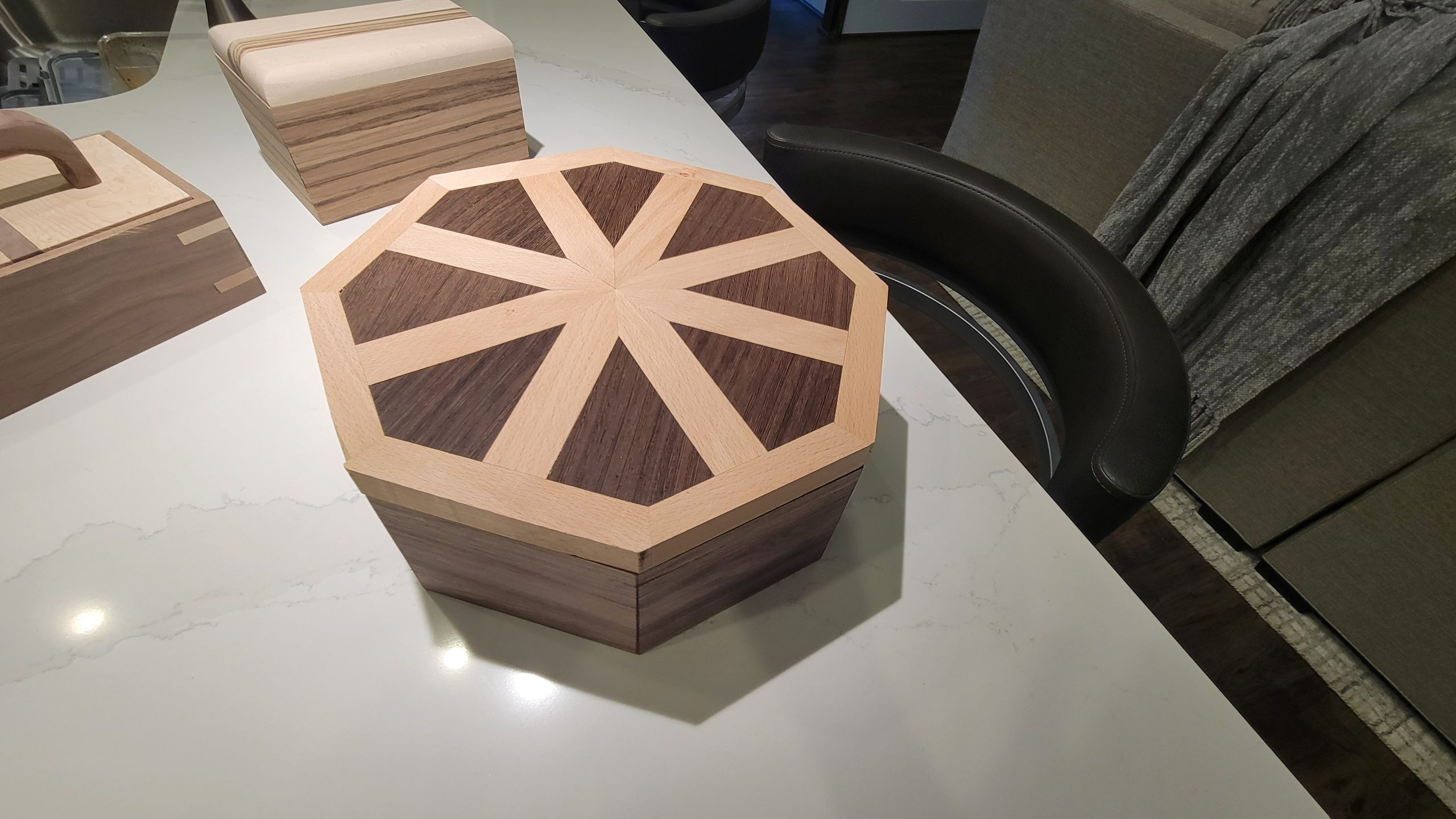
I built this set of small boxes from scrap wood so I could test box-building details without treating every choice like a final production decision. The batch let me compare mitered forms, glue-up combinations, a handmade handle, and splines for extra corner support.
These were experiments first and finished pieces second. The point was to learn how the joinery, lid fit, grain direction, and handle proportions worked together at a small scale.
Design Test Batch
The first pass was about comparing the boxes as a group: different shapes, different lid ideas, and different ways to make scrap pieces feel intentional.
Joinery Tests
The rectangular boxes gave me a place to check miters, corner reinforcement, and how the glue-up lines read once the boxes were closed up.
Lid and Handle Tests
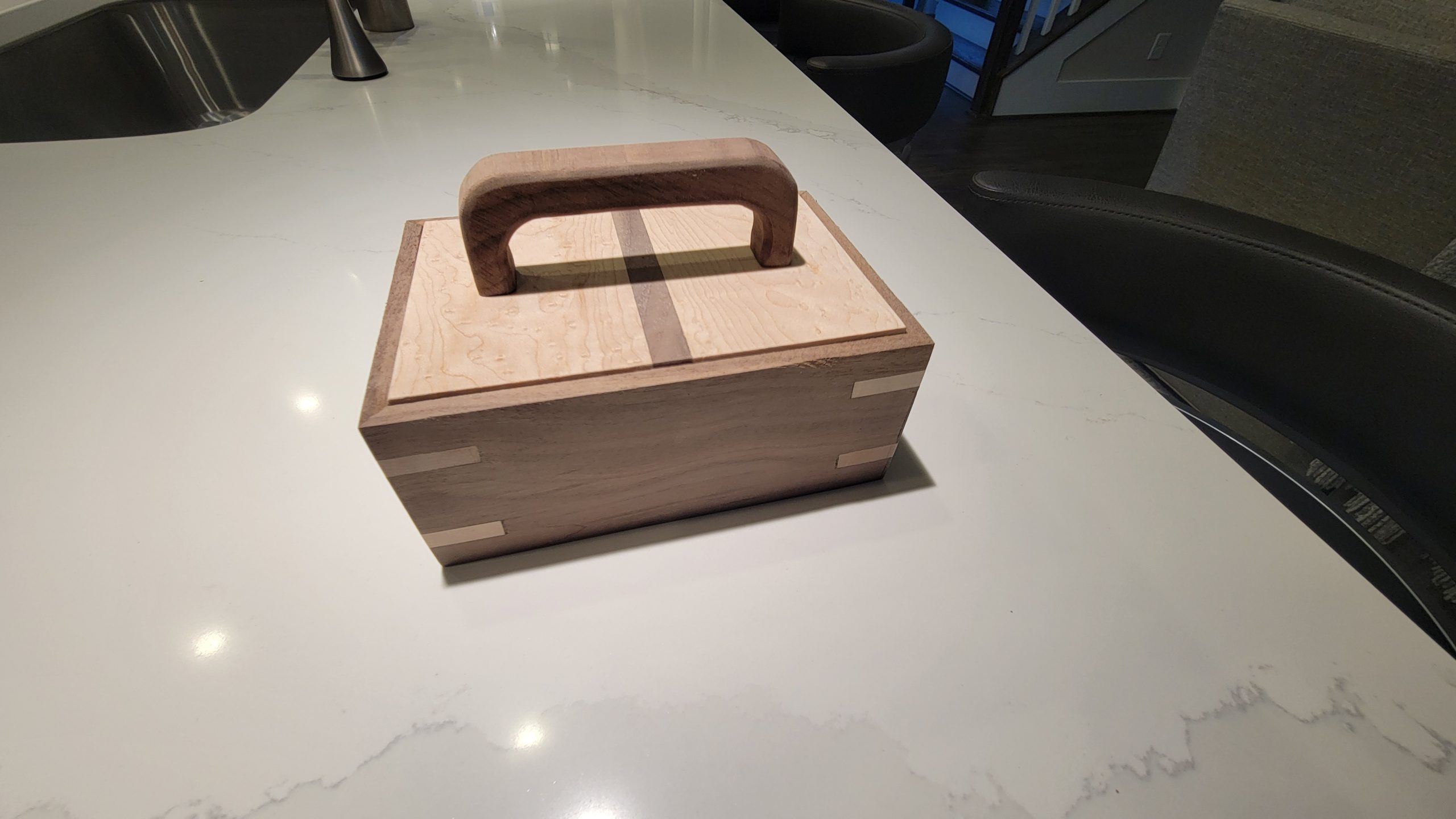
The handled lid was its own experiment. I wanted to see whether a shop-made handle could feel sturdy and proportional on a small box without overwhelming the lid.
Final Result
The value of this batch was the testing. The scrap wood kept the stakes low, while the finished boxes made it easy to compare mitered corners, spline placement, lid proportions, and grain contrast before carrying the strongest ideas into future builds.
Lessons Learned
Small boxes are useful design tests because every detail shows. The miters need to be clean, the splines need to look deliberate, the lid has to sit right, and a handle that works at this scale needs careful shaping.